 Welcome to this page for Mr. Mac’s LBSU-302: Information Fluency & Academic Integrity
through UMass Global! (formerly Brandman University)
The following materials are additional tools or links beneficial to course understanding.
Additional Links
What Faculty could do to Encourage Academic Integrity – Baylor University
https://tinyurl.com/2d57v5jx
WEEK 1 – ACADEMIC INTEGRITY & PLAGIARISM
MY APA LINKS
Note: Starting Fall 1, 2020 Brandman University has moved from the 6th edition to the 7th edition of APA formatting.
Scribbr: Most Notable changes from 6th edition to 7th edition APA
https://www.scribbr.com/apa-style/apa-seventh-edition-changes/
This site from Scribbr is a great breakdown of some of the most notable changes between the two editions
Mount Royal University APA Guides
By far my favorite and the most complete APA guide is found at Mount Royal University in Canada.
7th edition APA Guide (2020-2021)
APA Sample Paper from American Psychological Association
https://apastyle.apa.org/style-grammar-guidelines/paper-format/student-annotated.pdf
Preparing for the 7th edition of the APA Manual
https://apastyle.apa.org/instructional-aids/handouts-guides
WEEK 2 – SCHOLARLY & POPULAR SOURCES
Popular sources= Popular sources could be everything from periodicals and magazines. National Geographic which contains flashy ads could still be considered a popular source that does not have the same level of oversight as an academic journal.
Scholarly sources= This is academic journals. The articles available through Leatherby Libraries should be regarded as print materials first, that have been digitized for your convenience. Do not treat these as website citations.
WEEK 3 – IDENTIFYING, EVALUATING, & CITING SCHOLARLY SOURCES
WEEK 4 – RESEARCH QUESTION / USING THE DATABASES
For the week 4 assignment, you will find two scholarly articles of your subject choice using the library databases. You will choose one topic of your choice, this is usually/most commonly, researching your own career or a social topic you are interested in.
Finding articles by Mr. Mac – Step by Step Guide
https://libgentech.wordpress.com/finding-academic-articles/
This should assist you in finding two articles on whichever subject you choose for your week 4 assignment.
WEEK 5 – OPEN ACCESS JOURNALS
DATABASES
Elsevier (2019). Open Access Journals. Retrieved from: https://www.elsevier.com/about/open-science/open-access/open-access-journals
DOAB (2020). Directory of Open Access Books.
https://doabooks.org/
I found this website recently, like DOAJ this is rather a eBook database than journals.
OPEN ACCESS ARTICLES
Parsons, J. (2016, March 4). Who Pays for Open Access? Library Journal.
https://www.libraryjournal.com/?detailStory=who-pays-for-open-access
Somers, J. (2017, April 20). Torching the Modern Day Library of Alexandria. The Atlantic. https://www.theatlantic.com/technology/archive/2017/04/the-tragedy-of-google-books/523320/
WEEK 6 – GOOGLE SEARCH
Using Google for academic searching.
Google Scholar
This is an amazing tool when used in conjunction with library databases for finding academic journals. While Google Scholar findings from searches usually lead to Pay Per View (PPV) articles the search tool for finding materials should not be ignored. Materials can be found using this tool and if it leads to a PPV article can then be research again in the library databases that will not have the limitations of article purchase requirements.
https://scholar.google.com/
PROS of Google Scholar: Google Scholar quick cite tool (look at the APA page for more info), Popularity – “cited by:” link shows other authors that have cited the work.
CONS of Google Scholar: Many of the articles lead to purchase requirements Pay Per View (PPV), misinformation about use of this site leads to students assuming this is there only option to find academic articles.
Confusion about the use of library databases to online academic journals is blurred. Signing into a secure deep web database
Advanced Search– No longer an easily findable tool on the Google main page.
This site use to be easily found but with an advanced search you can easily narrow your Google search to .edu, .gov, .com, .net.
https://www.google.com/advanced_search
The Internet Archive
While not directly tied to Google search the Internet Archive is a year by year digital artifact of the development of internet history. This site is useful to discover the first date a website was created.
The Way Back Machine
https://archive.org/web/
Google Translate: https://translate.google.com/
Google Sky: https://www.google.com/sky/
Google Arts and Culture: https://www.google.com/culturalinstitute/beta/
WEEK 7 – WEBSITES
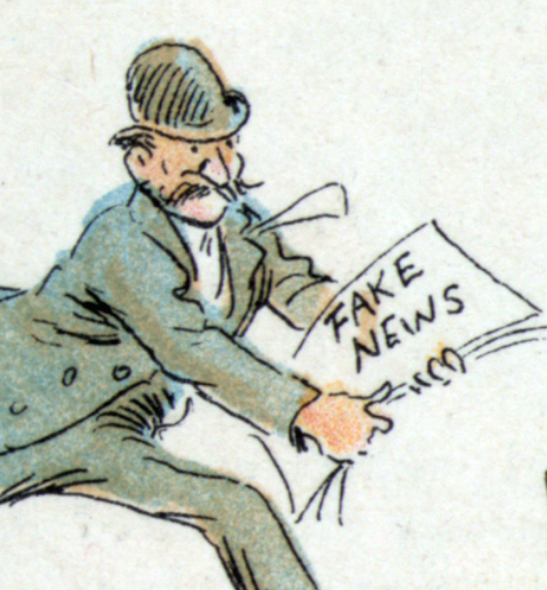
Fake, False, or Spoof?
The difference is in Fake / False news, the intent is to deceive the reader in the hopes of establishing an intended view.
“Hidden ballots in an election” That was a great fake news story from 2017.
https://www.wishtv.com/election/author-made-22k-over-fake-news-story-claiming-dummy-ballots-found-in-ohio/1064118466
The difference in a spoof or satire their is not intended to decisive or sway the reader. With a spoof satire like mentioned in the website the Onion is just funny. These stories are so far outlandish their is nothing that comes close to any truth. With false/fake news the possibilities of 1/2 truth are there and can confuse the average reader. The authors intent is either to create chaos or to try and sway readers to a certain point, say politically.

I love this infographic from the University of Texas Arlington. The Fact Check Like a Pro infographic goes hand in hand with the CRAAP Criteria Brandman uses for this course.
Enloe, C. (2017, May 21). Fake academic paper published in liberal journal hilariously exposes the absurdity of gender studies. The Blaze. https://www.theblaze.com/news/2017/05/21/fake-academic-paper-published-in-liberal-journal-hilariously-exposes-the-absurdity-of-gender-studies
Sokal Affair: https://en.wikipedia.org/wiki/Sokal_affair
Week 8 – Media & Final Paper – Literature Review
The Literature Review is sometimes hard to properly identify given the separation between the literature review and research paper is not easy to identify.
The literature review opens a broader dialogue. While the research question is a gateway into the literature.
The research question should be flexible so you can analyze and summarize
Its the backstory setup for future research
The six pieces of literature you have chosen are more properly identified to analyze the subject or field.
With this assignment you will examine specific materials/citation within the field: The literature review shows that you have researched your field and looked at the material within your profession. It basically shows you know your stuff. 🙂
With the literature review you could show someone else that you have insights into that subject. Maybe even how other people have approached the question.
Your methodology might be slightly different and may help to broaden or better understand the overall topic or subject. You’re pulling your chair up to a table of notables within the field and posing your idea. Where are you in relation to what has been done already. The terminology for literature review is so broad that I think students misrepresent what it means.
You’re not just reviewing the literature, you are placing your work within the overall subject. You were identifying gaps and problems with that literature.
A literature review means that you’re having that same conversation meaningfully. There may be global academics working on the same problem and you’re there … adding to the conversation.
With this paper you have a deeper understanding I have a question or subject and therefore have a connection to the other researchers in that individual field.
As many academics have related the word literature review is a clunky term by itself but it really helps the student or researcher to connect and identify with others within the field. By bringing their own representation of what that subject or question means.
Good academic research means the ability to connect with the open question it is the same question that has valueSo you can work on the same problem with researchers internationally.It is driven by the research question not necessarily based on the literature.
Allows the researcher to familiarize him or her with the current field.
Allows allows the researcher to identify current trends and past trends.
Paul Zurkowski President, Information Industry Association (1974)
In 1974, Paul Zurkowski is credited as having coined the term “information literacy.” Information Competency and Information Literacy are terms that are often used synonymously.
Association of College & Research Libraries (Division of the American Library Association)
“Information literacy is the set of integrated abilities encompassing the reflective discovery of information, the understanding of how information is produced and valued, and the use of information in creating new knowledge and participating ethically in communities of learning.”
 John Macomber